Monday, March 24, 2014

Honey-Sweetened Dried Cranberries

Here's another pantry staple that I've been wanting to make at home for a while. The ones in the store are almost always sweetened with sugar and coated with vegetable oil - both of which I'd prefer to avoid, so when I found a recipe (in The Complete Book of Small Batch Preserving) I was overjoyed. I adapted it to use honey instead of sugar, and it worked great (although the finished product is more sticky than what I'm used to, but I presume that's because I don't add any oil).

Homemade Honey-Sweetened Dried Cranberries
makes 3/4 cup (I always double or even quadruple the batch)
2 cups fresh (or frozen) cranberries
1/4 cup honey
Cut cranberries in half and place in medium bowl, stir in honey. Cover and let stand 24 hours, stirring occasionally. Drain off liquid. Place cranberries on a baking sheet and place in a 100 degree F oven for 24 hours (I use my dehydrator),
Store in an airtight container.

The Perfect Salad Dressing

In another of my "well, duh" moments, I discovered last night that mixing salsa (fermented, of course!) and sour cream make for the best lettuce topper ever! I think the kids still prefer ranch (salsa's a little to spicy for them) but I'm hooked!

Ooh, and if you add an avocado - perfection!

Friday, March 7, 2014

Incubator Success!

Ever since I first got chickens, I've been dreaming of hatching my own hens' eggs. I've tried getting breeds known for going broody (Orpingtons, twice!) and even buying bantams that had hatched out their own chicks before (only one ever set (Millie) and she got eaten 2 days before the eggs would have hatched. That was heartbreaking!) So when The Instigator (aka Mama Hen) told me that my niece wanted an incubator for her birthday, I told her I'd chip in for whatever she decided to purchase, if she agreed to hatch out some eggs for me.
She chose the Hovabator #1583 (the circulating air model) and also purchased the automatic egg turner and thermometer/hygrometer, for a total of $175. I was very skeptical that it would work - I'd tried to use one of those foam incubators before, with no success (to be fair, I'd been given it for free, it was definitely used (dirty), and it didn't have the fan. It turned out the thermostat didn't work, and even after I replaced it, I couldn't get the unit to keep a constant temperature.) But I still gave her 40 eggs to hatch out, figuring you never know, it might work!

And work it did! 21 days after we dropped off the eggs, the kids and I were back at her house for the weekend, eagerly waiting for "our babies" to make their appearance. On the drive over, she'd texted me that the first egg had pipped, and it hatched completely shortly after we arrived.
It was the most exciting, nerve-wracking, joyful experience I've had since I delivered my own children. All weekend, we waited, holding our breath as another chick would start "unzipping" her shell (yes, I called them all girls, hoping for mostly pullets!) and urging her on as she gave the final push and emerged from the shell. All day and night the sound of chirping came from the back bedroom (I don't know how my niece got any sleep in there!) and though the kids were running around and having fun with their cousins, I kept stealing back to the incubator to check on the chicks. As each chick hatched, we would remove it from the incubator and put it in a "first brooder" box to dry off under a heat lamp, so it wouldn't knock the other eggs around so much. Then, once it was dry and rested, we would move it to the main brooder with its siblings.

Halfway through the first day, I knew I was hooked, and went on Amazon to order my own incubator. I got the exact same setup she had (why mess with what works?), and as soon as it arrived I started another setting of eggs. 
My daughter added some incubator graffiti when I wasn't looking!
It was extremely simple to use. I set everything up, then made sure that the incubator kept a steady 99.5 degrees (Farenheit). I added water into the reservoir, put the eggs in the turner, and closed it up. Other than adding water anytime the humidity went below 40%, I didn't do anything (other than watch anxiously and dream of fluffy little chicks!)

(I highly recommend Anna Hess' ebook Permaculture Chicken: Incubator Handbook - exactly the information I needed, giving me confidence and peace of mind. Well worth the $2.99!)

On day 19, I removed the turner and set the eggs onto the wire floor, then closed everything back up again. Right on schedule, the first egg began to rock, and soon I saw a tiny hole in one of the shells. Before long, she was pecking a ring around the top of the shell, and her sisters were starting to crack their shells, too. At 11:00 at night I was awakened by the sound of LOUD chirping - the first chick had hatched! 7 more had pipped, and were peeping and wiggling inside their shells. The hatch had officially begun!
Exhausted babies!
For the next two days, I was on a non-stop "chick high" running back to the incubator over and over to see how things were progressing. By Sunday morning, there were 25 chicks, and by the end of the day 27 of the 41 eggs had hatched (I'd gotten 23 from the first batch at Mama Hen's, and 25 from the second batch she hatched out for me - about a 60% (25 out of 41) hatch rate - not too bad!)

It wasn't until about Tuesday, when the "chick high" had faded, that I realized that those 77 adorable little fluffballs would grow into full-sized chickens very quickly. Now where was I going to put them all?!
My "babies" at three months old, in the new chicken run my husband put up for me
This post added to Old-Fashioned Friday, the 104 Homestead Blog Hop Farmgirl Friday, and the Homestead Barn Hop.

Tuesday, February 18, 2014

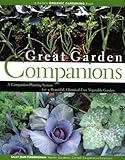
Book Review: Great Garden Companions


Great Garden Companions by Sally Jean Cunningham
Great Garden Companions: A Companion-Planting System for a Beautiful, Chemical-Free Vegetable Garden by Sally Jean Cunningham

I've been fascinated lately with the idea of permaculture, and one of the basic and easy to implement pieces of that idea is companion planting. If you've read Rosalind Creasy's Edible Landscaping, you know there's a lot that can be done to make gardens both more productive and more beautiful. Add a little "Carrots Love Tomatoes" - which lists which vegetables do well with which (according to various old wives' tales and anecdotes, not necessarily backed up with solid facts)  - and you're really getting started. Then add in some Lasagne Gardening (building easy, fertile raised beds), a touch of Rodale's Encyclopedia of Organic Gardening (listing different vegetables and how to grow them, as well as identifying garden pests and how to deal with them), John Jeavon's How to Grow More Vegetables Than You Ever Thought Possible on Less Land Than You Can Imagine ("bio-intensive" gardening in wide rows rather than single-crop rows), and Good Bugs for Your Garden, and you're well on your way. Or you could just read this book, get the basic information you need, and actually have time to get outside and do it!

I was particularly impressed by the fact that this book is so practical - this is what she actually does in her own garden (not just theoretical ideas, or second-hand passed-down principles), and she details exactly what you can do to get the same results. She includes diagrams of her garden - how she pairs up plants in each bed (and why), how she works in crop rotation, and how you can adapt her plans to your own situation.

This book focuses heavily on attracting beneficial insects to your garden, which in the author's experience drastically reduces pest problems in her vegetables, as well as increasing pollination. One of her favorite ways of doing this is to include flowers and herbs that attract these beneficials (and which also look and/or taste wonderful!)

Another benefit of companion planting is that it simplifies weed control - with plants covering all of the bed, short plants mixed with tall ones, etc., it leaves little room for weeds. And since there is such a variety of plants, they each give and take different nutrients, making it a much more balanced system.

I can't wait until it warms up enough for me to put this book to work in my garden!

Note: I was not payed to review this book, I just really love it! But if you click on any of the links above and buy a book at amazon.com, I will receive a small commission from the sale. Thank you for your support!

Saturday, February 15, 2014

Brew Your Own Kombucha in 10 Easy Steps

Besides being fun to say, kombucha is also tasty, bubbly, and full of probiotic goodness. It's a great source of B vitamins, antioxidants, and glucaric acids - and it's really easy to make at home!

I took a lot of convincing, but I'm now a true kombucha convert. My first experience was not a good one - a friend of mine let me try some of her homemade batch, but it was unflavored and apparently pretty strong, and I didn't like it at all. I don't like caffeinated tea generally (as opposed to herbal tea, which I love), and I'm sure that contributed to my dislike.

I put off trying it again for a long time (my sister-in-law, Mama Hen, has been trying to get me to give it a second chance for about a year now). My unwillingness was strengthened by the fact that you need to make it with white sugar (apparently natural sweeteners like honey or maple syrup won't work). I learned, however, that in the fermenting process the sugar is digested by the Symbiotic Colony Of Bacteria and Yeast (or SCOBY - basically the "starter", which looks kind of like a mushroom or jellyfish floating on the top of your tea. Kinda weird, but kinda cool, too, in a food-nerdy kind of way). So I started to consider trying it again.
My SCOBY

But there was still the problem of the taste. Quick to defend her beloved beverage, Mama Hen showed me that kombucha can be easily flavored with whatever you like. While I was staying with her one weekend, I tried some of her ginger flavored kombucha, and I was converted. I liked it, and what's more, the kids liked it! I asked her how hard it was to make, and she immediately said, "It's easy! Let me show you! I'll even give you a SCOBY to take home with you!"

And so it began. When I got home, I found a message from Mama Hen saying she'd just tried making blueberry flavored kombucha, and that her family loved it - so that's the flavor I tried for my first batch (it helped that I had blueberries already on hand). The kids loved it; so much, in fact, that by the time I got out my camera, this was all that was left of the gallon I'd made:
Kombucha
1. Boil 4 cups of uncholrinated water
2. Steep 2 Tablespoons of green or black tea (cannot be a decaffeinated variety! And yes, it must be real tea, not an herbal infusion) for 5-7 minutes
3. Strain out tea into one gallon glass jar
4. Mix in one cup of white sugar
5. Top off jar with cold, unchlorinated water, leaving at least an inch of headspace
6. Make sure that the jar of sugar water isn't too hot, then gently pour in the SCOBY with its incubator liquid
7. Cover with a cloth or coffee filter, secured with a rubber band (especially in the summer - fruit flies LOVE this!) and place your jar in a dark place (like a cupboard) for 7-10 days (longer if your fermenting spot is cool, or if you want a bolder flavor. You can brew it up to 30 days. Check the flavor by inserting a straw under the SCOBY, capping with your finger, pulling out the straw, and then tasting)
8. Remove your SCOBY and 1-2 cups of tea as an incubator for your next batch (or just brew up another batch and put your SCOBY back to work!)
9. Add flavoring to your finished kombucha - my favorite is blueberry; just add 1/4 cup of blueberry juice to your gallon of kombucha. Other flavor ideas: cranberry, ginger, or anything else you think would be good! You can certainly pour your kombucha in to smaller jars and flavor each one differently. Feel free to experiment!
10. (Optional) You can do a second ferment, leaving your flavored jars in a dark place for another two or three days for extra probiotic goodness.

Enjoy!

Thursday, February 13, 2014

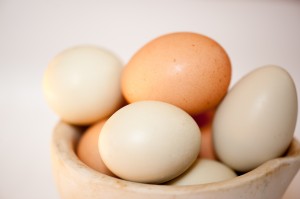
Egg-celent Article on the Price of Selling Eggs

I ran across this article this morning and thought it would be a good one to share here. If you're already selling eggs, or only dreaming of raising chickens one day, it's good to have a handle on the real cost of raising top-quality eggs in your back yard. Of course, for me, raising my own laying flock is more about boosting my kids' health and nutrition (you can't buy eggs as good as mine in any store!) than about economics, but it's still good information. I found his comments to be spot-on, with a few minor adjustments for local organic feed costs in my area.

Here's the blurb from the top of the article:
"Josh shares the facts and figures of raising pasture-raised, free-range, organic-fed hen eggs. It's math that can really help you understand your inputs and what you should be charging for that dozen of eggs you collect from your chickens."
Valdale-Farm-Eggs-1005-300x199
Small Farm "Egg-onomics" from On Pasture
http://onpasture.com/2013/12/02/small-farm-egg-onomics/

Brownies ala My Husband

My husband is a genius.
"You know those awesome Maple Syrup Brownies you make? Why don't you put a layer of Healthy Fudge on top, like a frosting?"

Yup, he's a genius. Especially where chocolate is concerned.

Wednesday, February 5, 2014

Don't Skip the Nutribalancer!

I've been tempted to leave out the Nutribalancer from my home-mixed chicken feed, but I learned the hard way that it's not such a good idea. Our bag ran out mid-January, and it was a week before we could get more. In the meantime, my flock stopped laying altogether! Thankfully, a few days after we started mixing in the Nutribalancer again, they started right up again, and we're almost back to our normal egg totals. Lesson learned!

Monday, January 20, 2014

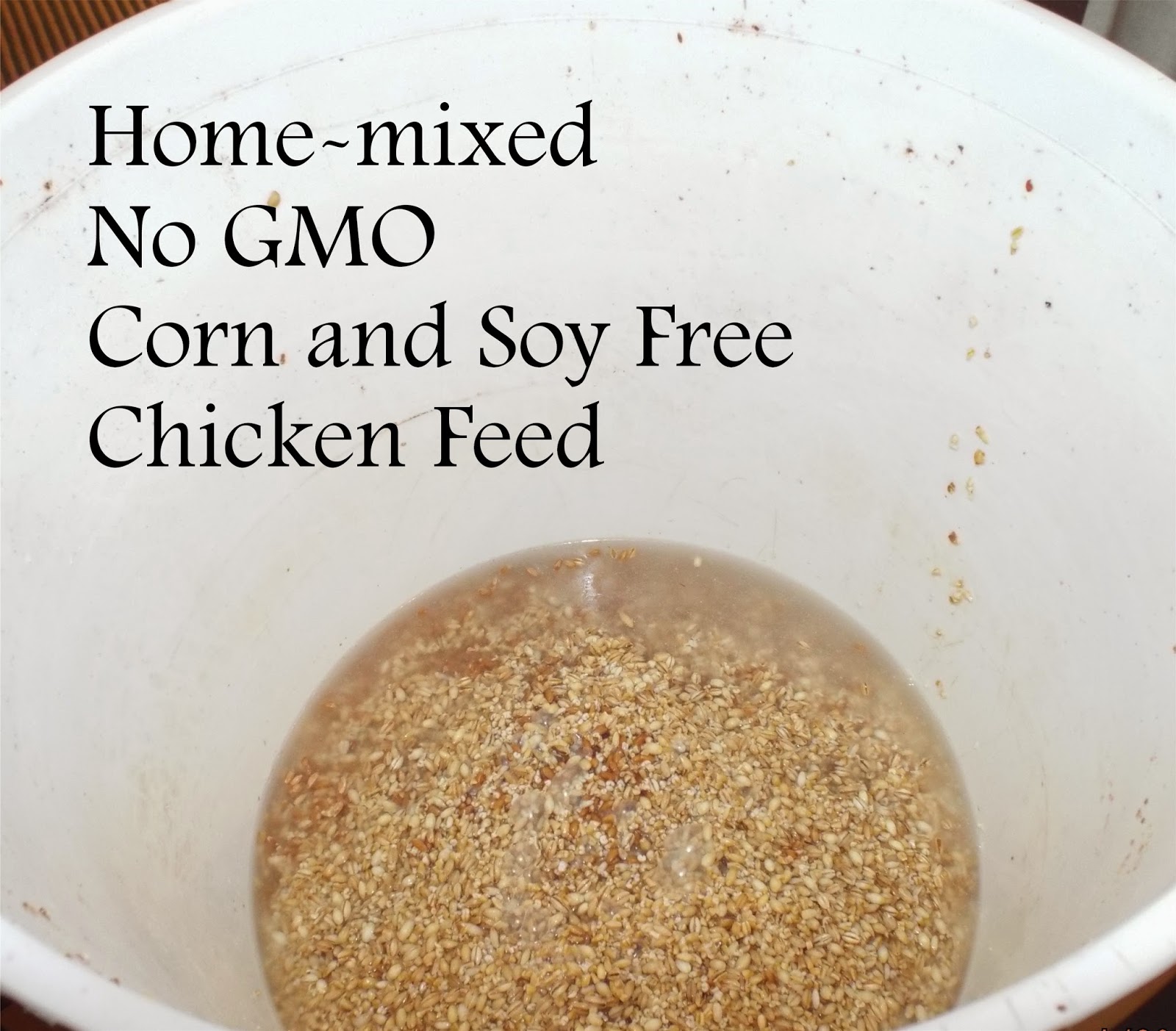
Home-mixed No GMO Corn and Soy Free Chicken Feed (that won't break the bank!)


I keep seeing posts online for homemade chicken feed, and I always click hopefully on the links, only to find that they all seem to have a dozen different ingredients (that I can't find locally) which would cost about five dollars a pound to mix. I don't know about you, but even considering the importance I put on quality food (that's why I raise my own chickens, after all!) I can't afford that. With my 40-odd bird flock, that would break the bank pretty quick!

So I finally sat down and did a little research into what a basic, simple-to-mix ration needed to have, and came up with the recipe below. I was a little scared to share my recipe right away, in case there was any glaring nutritional deficiency that might show up later (I'd hate to give bad advice and perhaps harm someone's animals!) but I'm happy to report that my girls have been living on this ration for five months now and happily laying that whole time (even through the sub-zero weather we've been getting lately) so I think it's safe to share.

This is still going to be more expensive than the feed from my local Farm & Fleet store (which I believe is still around $13 for a 50-pound bag), and even than the organic feed I was buying (which, last August, was about 43 cents a pound). But that feed relied heavily on soy and corn, both of which make me uncomfortable from a nutritional standpoint. Plus the fact that I had to drive an hour and a half one way to get it (and we always seemed to run out at the busiest times in my schedule!)

So I started making my own. It's important, whenever changing feed for your animals, to make the change gradually, mixing in a little more of the new feed each day, until you phase out the old ration completely. A sudden change of feed isn't good for any animal.

The Cheerful Agrarian's Homemade Chicken Feed
(this makes enough for about 10 hens)
2 cups wheat
1 cup oats or barley (I mix the two, to total 1 cup)
1 cup black oil sunflower seed
1/2 cup flax
2 Tbsp Fertrell Nutribalancer
I like to soak the grains overnight, mixing the wheat, oats, and barley and covering with water (or whey, if I have any left over from making cheese). This encourages the grains to sprout slightly, which enhances the nutritional content and makes the whole grains easier to digest. In the morning, I add the flax (which I first grind in a coffee grinder - unground flax just goes right through the chickens whole), the Nutribalancer, and the sunflower seeds.

Notes:
I tried soaking the sunflower seeds with the grains, but they tended to get moldy, even if only soaked overnight, so I switched to just adding them in the morning.

I don't buy ground flax because it goes rancid so quickly it would be bad before it picked it off the store shelf. My cheap little coffee grinder handles the flax seeds just fine.

I add raw apple cider vinegar to the chickens' water each day (about 1 tablespoon per gallon) to boost their immune system (here's the link to how I make it, or you can use some you've purchased).

They have oyster shell available free choice, and I like to toast eggshells after I've used them and feed them back, crushed, with the other kitchen scraps. I've never had problems with soft shells.

Whenever I think of it, I chop up a clove of garlic and add it to the kitchen scraps, again to boost their immune systems.

Every so often, I quarter a small pie pumpkin and feed it to the girls. It is reported that there are compounds in pumpkin seeds that kill intestinal worms.
I buy my grain in 50-pound bags at the local bulk food store for about 50 cents a pound. I like to get Wheat Montana's Bronze Chief Red Spring Wheat (red wheat has a higher protein content), but if they don't have it I've also used their Prairie Gold White Spring Wheat (which I've also seen for sale at my local Walmart in 25-pound bags, for about the same per-pound price). Wheat Montana guarantees that their wheat is GMO-free and chemical free (not organic, but as close as I can afford right now).

I did some research, and found that there is no GMO version of barley, oats, flax or sunflowers, so that makes my whole mix GMO free (Nutribalancer is certified for use on organic farms).

I buy my flax in 25-pound bags from the same bulk food store where I buy my grains, and it makes the most expensive portion of my mix at over a dollar a pound (but since I use less of it, it doesn't drive up the overall price of the feed too much). The sunflower seed I get from a local farmer for a little over 30 cents a pound.

So this feed costs me a little under 50 cents a pound - which is more than I was paying for the organic feed, but I don't have to drive an hour and a half to get it (gas isn't getting any cheaper, nor is the wear and tear on my truck!) and it doesn't have any corn or soy in it (which I'd prefer not to have, even if it's organic). The biggest perk, though, is that I could one day grow all of this myself (if I scaled way back on the number of chickens I raise and way up on the amount of garden space for growing grain - but still, theoretically, it's possible). In the meantime, I'm looking for more local farmers who would be willing to sell grain directly to me, which I think would be a very happy compromise.

This post is part of the Sunday Social blog hop.

Super Simple Chocolate Syrup

I've tried many recipes for chocolate syrup, some with evaporated milk, some with heavy cream, others with all kinds of complicated ingredient lists - when I found this, I couldn't believe it would work, but it did! So simple, and so yummy!

Super Simple Chocolate Syrup
1/2 cup maple syrup
1 Tbsp cocoa powder
Mix well, and it's ready to go!

(This recipe is definitely not set in stone - feel free to use more or less of either ingredient, to your personal taste.)


My Favorite Homemade Ice Cream Sandwiches

I can't take the credit for these - they were my husband's idea - but they are soooooo good! Just put a scoop of Maple Syrup Sweetened Ice Cream between two Zucchini Chocolate Chip Cookies. The cookies are nice and soft, so they don't squish all of the ice cream out when you take a bite. Perfect!

Maple Syrup Sweetened Ice Cream

One of my gifts last year was a Cuisinart ice cream maker (only $50 on Amazon!) This quickly became my favorite recipe:

Maple Syrup Ice Cream
2 cups cream
1 cup whole milk
1/2 cup maple syrup
1 egg (optional; I think it makes it extra creamy)
Dash salt
Mix well and chill. Prepare according to ice cream maker directions.

For chocolate ice cream, add 2 Tbsp cocoa powder.

My favorite way to serve this is topped with Super Simple Chocolate Sauce, with a Maple Syrup Brownie on the side. Mmmmmmm!

Tuesday, October 15, 2013

Book Review - Eating on the Wild Side

Eating on the Wild Side by Jo Robinson


Ok, I have to admit that when I first saw this book, I thought it would be about foraging for edible weeds or perhaps interesting venison cookery. I was delighted to find, however, that it's chock-full of real, helpful information for people interested in getting the most nutrition out of their food, but who prefer to get their food from the garden, farmer's market, or grocery store.

The book covers most of the common fruits and vegetables commonly available in the U.S., discussing the plant's history (did you know most of today's sweet corn was developed from seeds exposed to the nuclear radiation from the bombing of Hiroshima?), nutritional profile (artichokes have one of the best antioxidant profile of any food found in the grocery store!), preparation tips (believe it or not, you can get more antioxidants out of blueberries if you cook them), and a list of the best varieties to look for in the grocery store, farmer's market, or seed catalog (for example, a Fuji apple has more phytonutrients than a Braeburn).

This book is such a wealth of information for anyone looking to get the best nutrition from their food choices (I will definitely be buying myself a copy - I know I'll be looking back for tips, both when I'm perusing the seed catalogs in January and planning my family's meals each day). What a find!